
Moraine Township Property Taxes
Located in Lake County along the Lake Michigan shore, Moraine Township is a scenic, established suburban community just north of Chicago. Covering only about 12 square miles, Moraine Township features a mix of residential neighborhoods, parks, and lakefront communities. Moraine Township property owners are feeling the impact of rising Lake County property taxes.
As property taxes in Illinois continue to rise, Moraine Township property owners may be looking for ways to reduce their tax burden. Reviewing your property assessment is an important first step. If your property is overvalued or assessed higher than comparable properties, you may have an opportunity to appeal.
1 Search for your Property
Start the process to reduce your property taxes by entering your property address below and searching as step
Yes, O’Connor can help you reduce your property taxes.
- Yes – there is NEVER a fee unless we reduce your property taxes
- Simple on-line enrollment in just 2 or 3 minutes
- Personalized concierge service site visits
- O’Connor saved clients over $213 million in 2025!
2 Enroll for property tax savings
Potential Tax Savings For Your Property
May be over-assessed by
*
Potential Tax Savings
*
Have Additional Properties?
Benefits of O’Connor :
- Simple, online enrollment in just minutes, or call us at 713.290.9700 if you prefer.
- No fees ever unless we reduce your property taxes, not even a nickel. We promise.
- Aggressive property tax consultants with hundreds of years collective experience. We understand the people and process to negotiate lower property taxes for you. Our interests are properly aligned. We never, ever get paid unless you reduce your property taxes.

Benefits of O’Connor :
- Simple, online enrollment in just minutes, or call us at 713.290.9700 if you prefer.
- No fees ever unless we reduce your property taxes, not even a nickel. We promise.
- Aggressive property tax consultants with hundreds of years collective experience. We understand the people and process to negotiate lower property taxes for you. Our interests are properly aligned. We never, ever get paid unless you reduce your property taxes.
Are you sure you want to go back?
Your changes may not be saved.
Is Your Moraine Township Property Overassessed?
Your property’s assessed value plays a key role in determining how much you pay in property taxes. If the assessment is higher than your property’s fair market value or higher than similar properties in your area, you could be paying more than your fair share. Reviewing your assessment can help uncover potential errors and determine whether an appeal may be worthwhile.
The process of reducing your property tax bill can seem complicated and intimidating, but you don’t have to navigate it alone. Understanding how your property is assessed and knowing what options are available can help you determine your fair share. We’ve outlined the steps property owners can take to review their assessments, identify potential savings, and determine whether an exemption or property tax appeal may be right for them.
How To Navigate Appeals vs. Exemptions
As with the rest of Illinois, the people of Lake County and Avon Township are looking for the best way to reduce their tax burden. Lake County currently has the highest property taxes in the state, which is troubling, especially considering Illinois ranks No. 1 in the nation for real estate taxes. While taxes cannot be lowered directly through various techniques, the values used to calculate property tax bills can be lowered. There are two primary methods used to lower taxable value, and every Avon Township property owner should be using them whenever possible.
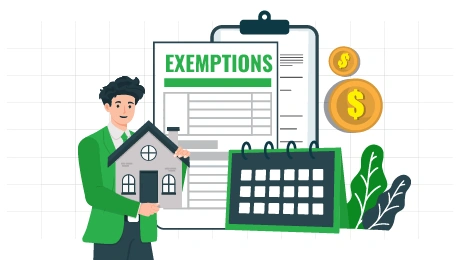
Exemptions:
A property tax exemption is one of the simplest ways eligible homeowners can reduce their property tax burden. In Lake County, the homestead exemption can reduce a qualifying property’s equalized assessed value (EAV) by $8,000. Additional exemptions may be available for homeowners aged 65 and over, people with disabilities, and some veterans. While many exemptions are straightforward to apply for, some have additional eligibility or income requirements.

Property Tax Appeals:
A property tax appeal challenges the assessed value of your property, rather than the amount of your tax bill. Property owners who believe their assessment is too high or inconsistent with comparable properties can file an appeal. A successful appeal requires supporting evidence. Comparable properties, recent sales, property characteristics, and other assessment information can help demonstrate that a property’s value should be lowered.
Appeal Can Mean the Difference in Avon
The main driver of a successful property tax appeal is the evidence. This is because appeals must be decided on certain grounds, each of which requires a specific type of evidence. In cases of overassessment, which occurs when a home or business is assessed at more than its market value, the taxpayer must provide a series of property sales dating back three years. For cases of a lack of uniformity, the taxpayer needs to bring assessments that indicate they are being overassessed. The evidence in either case must meet strict requirements and should be similar in size, location, age, and other characteristics.
In addition to strict evidence, appeals also have a narrow deadline, usually 30 days after the notice of assessment has been published. There is only a single appeal deadline, which is with the Board of Review (BOR). While Cook County has two separate cutoff dates, this is not the case for Avon Township or the rest of Lake County. This means that a taxpayer must be fully prepared by their deadline, or they will lose the ability to challenge their values entirely. There are several deadlines that a taxpayer needs to be prepared for.
 Important Moraine Township Property Tax Deadlines:
Property tax appeal deadline: October 5, 2026
First installment of property taxes due: June 4, 2026
Second installment of property taxes due: September 4, 2026
O’Connor Helps Build a Stronger Portfolio of Evidence
Gathering the right evidence is often the biggest hurdle for property owners considering a property tax appeal. An overassessment appeal may require reviewing sales from the previous three years, while an appeal that suggests lack of uniformity requires finding comparable properties with similar characteristics. Finding the relevant comparables can be challenging and time-consuming.
That is where O’Connor can help. O’Connor has been in business since 1974 and has specialized in property tax services since the 1990s. We understand how crucial strong evidence is to a successful appeal. We begin with a data-driven analysis of your assessment to identify potential opportunities for a property tax reduction. We then use our proprietary databases to research and identify comparable properties to support your case. Once the evidence has been gathered and your case is prepared, we coordinate the appeal with a law firm well-versed in property tax matters. There is no cost to enroll with us, and you only pay for our services if your property taxes are successfully lowered.