


Cook County Property Tax Reduction Services
Start the process to reduce your property taxes by entering your property address below and searching as step 1
Yes, O'Connor can help you reduce your property taxes
Confirm a few details about your property to enroll for savings as step 2
Have Additional Properties?
Review and sign your enrollment documents to finish step 3
Preparing your documents...
Cook County Property Tax
Cook County has some of the highest property taxes in America, and with every triennial reassessment, that number is only growing further out of control. With some properties seeing increases of up to 500% in some areas, it has become critical to protest your Cook County property taxes every year. Your taxes can increase at any time, even outside of a reassessment, you need someone to watch your back.
- Annual automatic reviews of your information mean that you never miss a deadline.
- Tax experts are vigilant for increases due to equalization or other factors.
- Protect your legacy with one of the largest property tax consulting firms in the nation.
Appeal Deadlines for Cook County Townships Scheduled for 2025/2026/2027 Reassessment
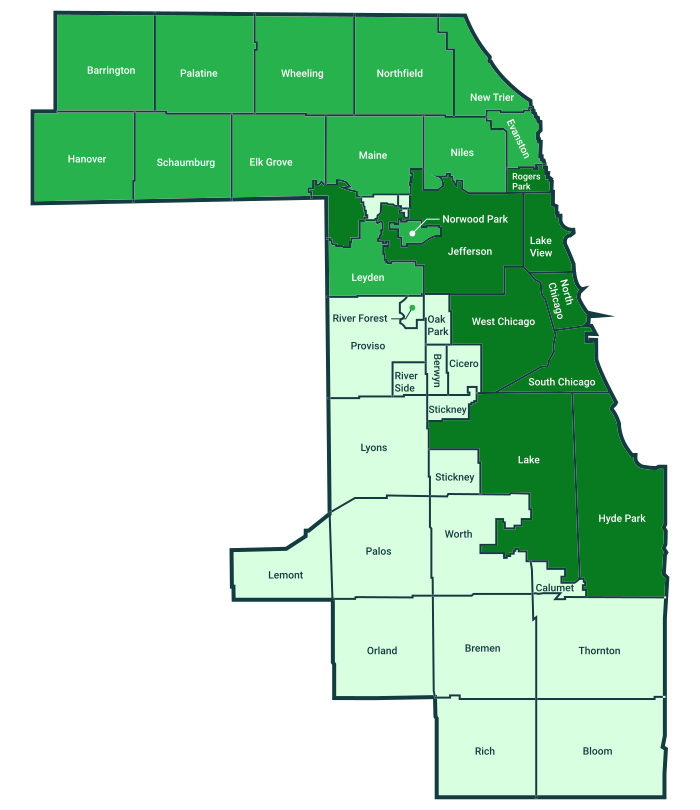
Townships We Serve
How O’Connor Helps Cook County Real Estate Owners with Property Taxes
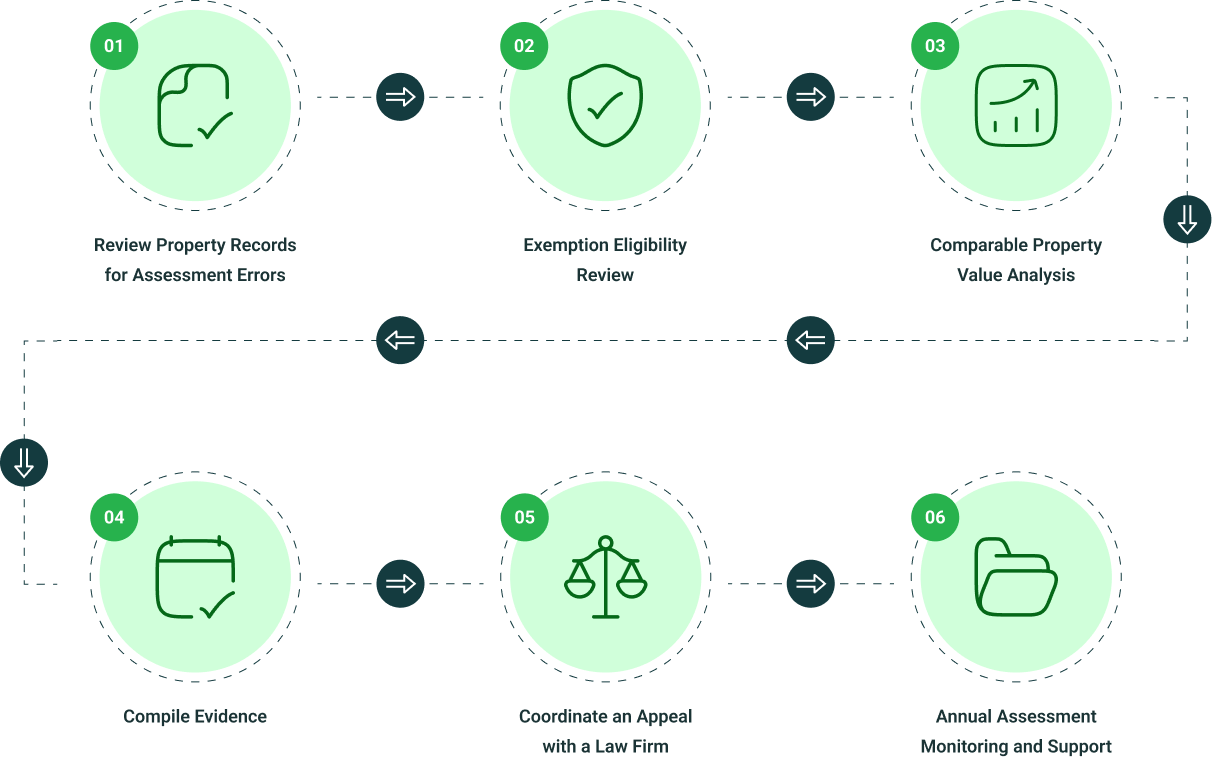
This information can come from a variety of sources, such as the assessor, property tax lookups on various databases, or by exploring property records. Many sites also offer property tax calculators that can shed some light on the composition of final bills. However, it can be difficult to put all of these statistics into their proper context, which can lead to missing a chance at a reduction. O’Connor helps taxpayers in the Chicago area identify and act on these hidden opportunities. Our team reviews property assessments, analyzes comparable properties, examines property records for inaccuracies, and determines whether a piece of real estate’s assessed value exceeds its market value. We also help businesses and homeowners identify available exemptions that may reduce taxable value and lower annual obligations.
By reviewing tax records, assessment data, and real estate characteristics, O’Connor can identify issues such as incorrect statistics, missing exemptions, overassessments, and valuation discrepancies that may contribute to higher bills. If these are grounds for an appeal, our experts will begin gathering the evidence needed to build a portfolio to present the issues to the Cook County Assessor’s Office (CCAO) or the Board of Review (BOR). If an appeal is needed, we will coordinate with a law firm that specializes in appeals and real estate matters.
How we calculate your bill(Sample Calculation)
= Assessment Reduction
= Tax Savings
= Amount Due
*We will adjust your initial assessment and tax rate to reflect all discounts associated with your active exemption(s). You will never be charged for a reduction in your assessed value if your final tax bill is not reduced.
Our Process
With decades of real estate consulting experience, O’Connor works to help Chicagoland homeowners and commercial real estate owners pay only their fair share of taxes. This is achieved by analysing assessments for any potential errors.
What Are Property Tax Rates Across Cook County?
Tax rates in Illinois can vary significantly depending on where a home or business is located. Local taxing entities such as school districts, municipalities, park districts, and other government agencies determine annual budgets, which directly influence tax rates.
Property taxes are calculated based on market value, applicable exemptions, assessment ratios, the equalization factor, and the tax rates established by local jurisdictions. Because each community has different funding needs, taxpayers may see substantial differences in tax bills across the county.
Tax rates can increase due to rising local government budgets, pension requirements, and other funding issues. Residential properties in Cook County are generally assessed at 10% of market value, while most commercial properties are assessed at 25%, creating additional complexity in the system.
Property Tax Rates Across Cook County
Why Do Property Tax Rates Vary Across Cook County?
Several factors can impact tax rates, including:
Because equalization factors and tax rates can change annually, many homeowners pay more than their fair share without realizing it. Property tax appeals and exemptions are among the most effective ways to reduce taxable values and ensure assessments reflect accurate market conditions.
Reduce Your Cook County Property Taxes
O’Connor helps Chicagoland homeowners and businesses challenge overassessed values through data-driven analysis and the gathering of evidence. Our team reviews assessments, analyzes comparable properties, and builds evidence that clients can use in their appeal. There is no charge for these services, you only pay if your taxes are lowered.
Cook County Property Tax Bill
Cook County property tax bills are based on a piece of real estate’s equalized assessed value (EAV). EAV is calculated by taking the market value of a home or business, applying the assessment ratio, and then the equalization factor. After any exemptions are applied, the EAV is then multiplied by the tax rate.
Annual property tax bills can increase due to triennial reassessments, rising local government budgets, and changes in levies. Even when real estate values remain stable, homeowners may see higher bills if local districts increase spending or if assessments do not accurately reflect current market conditions.

What Are Property Tax Rates Across Cook County?
Tax rates in Illinois can vary significantly depending on where a home or business is located. Local taxing entities such as school districts, municipalities, park districts, and other government agencies determine annual budgets, which directly influence tax rates.
Property taxes are calculated based on market value, applicable exemptions, assessment ratios, the equalization factor, and the tax rates established by local jurisdictions. Because each community has different funding needs, taxpayers may see substantial differences in tax bills across the county.
Tax rates can increase due to rising local government budgets, pension requirements, and other funding issues. Residential properties in Cook County are generally assessed at 10% of market value, while most commercial properties are assessed at 25%, creating additional complexity in the system.
Property Tax Rates Across Cook County

Why O’Connor?
- No charge for evidence or analysis unless your taxes are lowered
- Simple online enrollment in just 2 or 3 minutes
- Personalized concierge service site visits
- Expert analysis and evidence preparation