
While Chicago and Cook County are the economic heart of Illinois, Chicagoland is surrounded by many other vital counties. These collar counties feature some of the most valuable property in the United States and boast a wide collection of urban, rural, suburban, and exurban communities. While some townships are buttressed right up against Cook County, others are far afield. Still, most have their real estate markets shaped, in one way or another, by the Windy City.
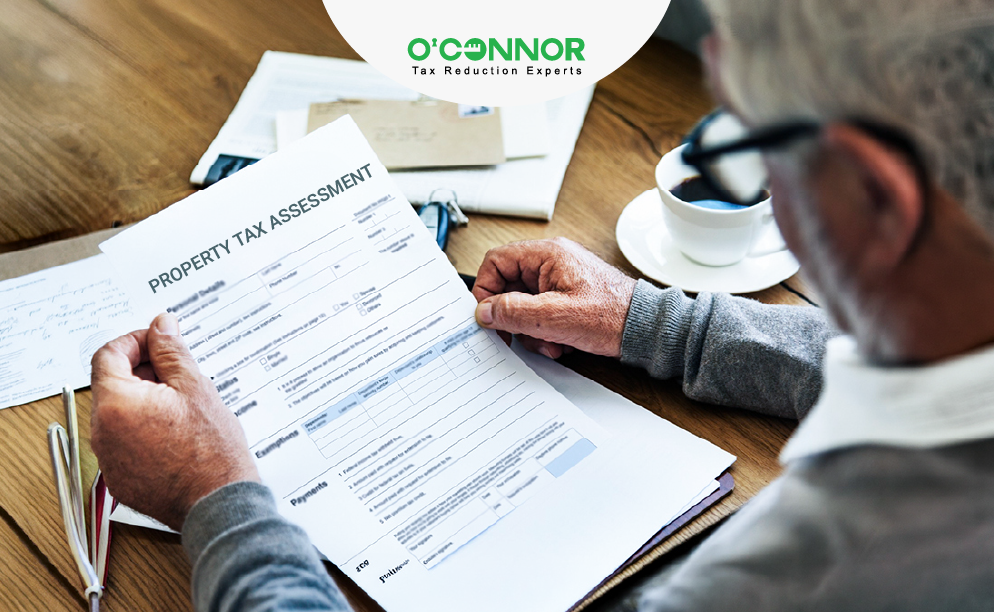
Illinois currently has the highest property taxes in the nation, with Cook and the collar counties home to many of the state’s highest-tax counties and townships. However, a record number of Illinois homeowners and businesses are reducing their taxes through various means. While exemptions act as the first line of defense, the use of property tax appeals has reached record levels, potentially saving property owners billions of dollars collectively across the area.
Ways to Reduce Property Taxes in Illinois
The two main ways that property owners can reduce their property tax burden. in Illinois are through exemptions and appeals. Exemptions can exclude a portion of a property’s equalized assessed value (EAV) from taxation. For instance, the homestead exemption cuts EAV down by $8,000, which can result in significant savings. Appeals are much more complex but play a vital role in Illinois property taxes, especially in recent years.
Why Property Tax Appeals are Important in Illinois
While appeals cannot lower tax rates or the equalization factor, they can reduce bills by lowering the property values that form the basis of property tax bills. This is done by disputing the values put forward by the assessor, which can be subjective. By protesting these values, homeowners and businesses can ensure that they are only being assessed a fair amount. Given how property values and taxes have become, getting even a small break on an assessment can have an impressive cascading effect on a tax bill, perhaps saving thousands of dollars.
In order to file a protest, there must be grounds to do so. In Illinois, the grounds for an appeal generally include overassessment or a lack of uniformity in assessment. Overassessment is when a home or business is assessed higher than what it would sell for on the open market. In Illinois, properties in the same location, with the same characteristics, must be assessed uniformly. If either of these grounds is present, then an appeal should be filed to determine the true value of a property. Appeals can also be used to help properties that do not qualify for exemptions, such as rental homes.
Appeal Deadlines are Final
In Illinois, appeal deadlines vary by township, with most having their own deadlines. Cook County has two appeal deadlines, but the rest of the state has only one. Appeals are filled with the Board of Review (BOR), an impartial body that considers evidence presented by both the taxpayer and the assessor. Once a notice of assessment is published, a property owner has 30 days to file an appeal. Because there is only one deadline, missing it means that the taxpayer will not be able to protest. Retroactive protests are not readily available in Illinois, so this means that any errors or overassessments will continue until the following year.
Upcoming Deadlines for Illinois Collar Counties
Lake County Townships
- Cuba: September 21, 2026
- Grant: September 14, 2026
- Libertyville: September 21, 2026
- Warren: September 8, 2026
- Wauconda: September 14, 2026
- Waukegan: September 8, 2026
- West Deerfield: September 14, 2026
- Zion: September 14, 2026
Will County Townships
- All townships: September 14, 2026
Evidence is Key for a Successful Appeal
Once the grounds for appeal are established, the evidence needed to secure a reduction can be found. Cases of overassessment require the gathering of property sales records dating back three years. In cases involving a lack of uniformity, assessments from neighboring properties must be put together to demonstrate that the taxpayer’s property is being unfairly assessed. In either case, it is best to have at least five comparable properties. Each of these must be close to the taxpayer’s property when it comes to age, size, classification, location, and the number of rooms.
O’Connor Offers Expert Evidence and Analysis
When it comes to Illinois property tax appeals, evidence is the difference between a reduction and a rejection. Since the people of the collar counties only have one shot to file an appeal, your evidence must be on point and as comprehensive as possible. Appeals, especially those with the BOR, can be difficult for a layperson, since the evidence required can take a long time to gather and often requires an understanding of both property valuation and the Illinois property tax system.
We at O’Connor are here to help with the process and will take care of this vital step. We use data-driven techniques to analyze your assessment, looking for any potential issues. We then use our proprietary databases to identify relevant assessments, sales records, and comparable properties needed to support the true value of your property. Once we have this evidence gathered and curated into a portfolio, we will coordinate an appeal with a law firm that has decades of property tax experience. You will never be charged for this evidence or analysis and will only pay a portion of your savings if your taxes are lowered.