
Berwyn Township Property Tax Appeal Services
While outside of Chicago proper, Berwyn is what many people think of when they picture classic Chicago. Densely populated with vintage homes and a working-class heritage, Berwyn stands out when compared to some of the wealthier suburbs. This vintage charm and close proximity to Chicago have made Berwyn an excellent place to live and work, and the relatively affordable housing and excellent schools make it the perfect place to raise a family. Unfortunately, like the rest of Cook County, Berwyn has seen rising property values and taxes in recent years, which threaten to upend the traditional township’s identity.
1 Search for your Property
Start the process to reduce your property taxes by entering your property address below and searching as step
Yes, O’Connor can help you reduce your property taxes.
- Yes – there is NEVER a fee unless we reduce your property taxes
- Simple on-line enrollment in just 2 or 3 minutes
- Personalized concierge service site visits
- O’Connor saved clients over $213 million in 2025!
2 Enroll for property tax savings
Potential Tax Savings For Your Property
May be over-assessed by
*
Potential Tax Savings
*
Have Additional Properties?
Benefits of O’Connor :
- Simple, online enrollment in just minutes, or call us at 713.290.9700 if you prefer.
- No fees ever unless we reduce your property taxes, not even a nickel. We promise.
- Aggressive property tax consultants with hundreds of years collective experience. We understand the people and process to negotiate lower property taxes for you. Our interests are properly aligned. We never, ever get paid unless you reduce your property taxes.

Benefits of O’Connor :
- Simple, online enrollment in just minutes, or call us at 713.290.9700 if you prefer.
- No fees ever unless we reduce your property taxes, not even a nickel. We promise.
- Aggressive property tax consultants with hundreds of years collective experience. We understand the people and process to negotiate lower property taxes for you. Our interests are properly aligned. We never, ever get paid unless you reduce your property taxes.
Are you sure you want to go back?
Your changes may not be saved.
Triennial Reassessment
In 2026, the southern and western suburbs of Cook County will experience the triennial reassessment. This is when the Cook County Assessor’s Office (CCAO) focuses on a third of the county and determines the value of every home and business. The last time that Berwyn was examined this way was in 2023, one of the most infamous reassessments in Chicago’s history. Berwyn saw the overall market value of its property increase by 36.78%, one of the highest that year. Since values are used to calculate property taxes, this has also led to historic increases in tax bills. Time will tell if 2026 will be as harsh, but the people of Berwyn are pursuing property tax reduction in record numbers, like the rest of the county.
Tools to Reduce Property Taxes
Tax rates and the equalization factor are both beyond the control of homeowners and businesses. However, property values can be reduced, which then leads to smaller Cook County property taxes. There are a few methods for both businesses and homeowners, all of which are worthy and effective options in their own right. Because of rising values, especially in reassessment years, key organizations in the Cook County government, including the CCAO and the treasurer, encourage the use of every single one of these techniques to get values down to the fairest level possible.
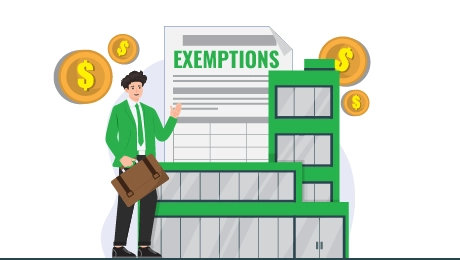
Exemptions:
The CCAO has a litany of options when it comes to exemptions, and every taxpayer should utilize as many as they are eligible for. The base homeowner’s exemption alone can reduce equalized assessed value (EAV) by $10,000. Seniors, those with disabilities, and many veterans can also land substantial reductions simply by filing.
Property Tax Appeals:
These challenges to the CCAO lower taxes by calling inflated values into question. Property tax appeals work alongside exemptions and can offer even greater savings. While they require more effort, they are being filed in record numbers as taxes continue to rise.

Cost Segregation:
This is used by businesses to lower or even eliminate federal income taxes. This is achieved by utilizing the accelerated depreciation of tangible assets, such as buildings, machinery, and inventory, which can shield a business and add exceptionally to cash flow.
Property Tax Appeals Even the Score
Property tax appeals are based on having certain grounds, which are then backed by evidence to be successful. This includes overassessment, where the market value of a property is higher than it would logically sell for. This is proven through the gathering of sales records dating back three years. Lack of uniformity occurs when a property is assessed at a higher rate than other properties in the same area. This can be shown by providing assessments from the same area. To be used for valid comparisons, the properties in either case need to be in the same location, be around the same age, and be about the same size.
In Cook County, taxpayers have two separate appeal deadlines, while the rest of Illinois has just one. The first is the assessor appeal, where taxpayers take their grievances directly to the CCAO. The second is months later and is with the Board of Review (BOR). With the right evidence, either can offer large reductions in taxes. The deadline for assessor appeals is 30 business days after the notice of reassessment is sent out.
 Key Deadlines for Berwyn
Assessor appeal deadline: July 6, 2026
Board of Review appeal deadline: September 29, 2026
First installment of property taxes due: April 1, 2026
Second installment of property taxes due: pending
O’Connor Helps with Gathering Evidence
While it can be complex, gathering evidence is the most important part of launching a successful property tax appeal. This tends to be the barrier to entry for homeowners and businesses, as it can be an extremely time-consuming task. This includes reviewing the assessment and spotting any factual errors, along with deciding if the values are fair. We at O’Connor are here to help, and are experts in analysis and gathering evidence.
When clients sign up with us, we will analyze their assessment. If we find any issues, we will use data-driven techniques to gather evidence, including using our state-of-the-art databases to find the perfect comparisons for our clients’ properties. Once we have all of the evidence needed for the case, we will coordinate an appeal with a law firm that focuses exclusively on property tax matters. Taxpayers will not pay for the evidence or analysis unless they and their lawyers can lower their taxes.