
With some of the highest property tax rates and values in all of America, Suffolk County can be a difficult place for taxpayers to live. This leaves homeowners and businesses scrambling for a way to reduce these taxes somewhat, hopefully making things more manageable. The first step is exemptions, with the STAR program being incredibly beneficial for homeowners. However, in what is becoming a tradition for a growing number of people in the county, grieving property taxes stands as a great option as well. By grieving the taxable value of their properties, the people of Suffolk have a good chance of achieving a reduction in their overall taxes.
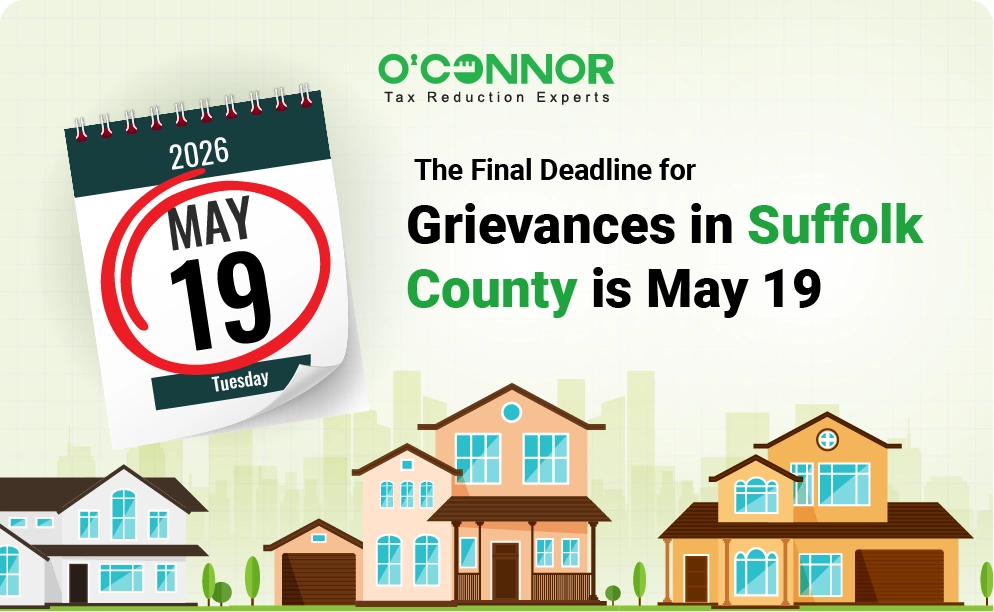
The deadline for filing a grievance is May 19. With one of the smallest grievance windows in the state, the people of Suffolk County must strike now if they want to get a reduction, as this will be the last chance until 2027. In this article, we will cover why both homeowners and businesses should think about grieving their taxes before it is too late.
Why are Taxes so High in Suffolk County?
Thanks to restrictive zoning laws, limited space, high demand for land, and excellent schools, Suffolk County boasts some of the most expensive land in the nation. Thanks to its proximity to New York City, Suffolk joins Nassau County as one of the favored destinations for New Yorkers looking to make their way to the suburbs. Public pensions have also led to increased tax rates, as many organizations, like school districts, have had a difficult time meeting their budgets in recent years. Since little in the way of housing is being built, existing homeowners and businesses must bear the burden.
Several Suffolk County municipalities approved higher budgets and property tax levies for 2026. The county alone increased its tax rate by 3.18%, which will compound with those of townships. Coupled with rising property values across Long Island, many taxpayers could see higher bills. Tax rates are applied to property values to determine the final tax bill, so an increase in either usually leads to a significant spike.
How Grievances Lower Taxes
Also known as appeals in New York City, grievances work by challenging the market value of a property. This is only for taxation and has no bearing on the resale value of a home or business. A tentative assessment roll was released by the county on May 1, which contains many details that need to be verified, including property descriptions and values. By reviewing your tentative assessment roll, you can see if there are any issues with your property. Start by looking for any factual errors, such as the wrong classification, the incorrect number of rooms, missing exemptions, or nonexistent improvements. These are easy to fix if grieved on time and can bring in substantial savings. This is particularly true with errors in classification, as businesses are taxed much higher than homes.
Once the basic information is verified, the property values should be checked next. The market value should be the focus, as it has a large impact on the tax bill. If it seems inaccurate or there was a large spike in value from the previous year, then a grievance should be filed. In order to demonstrate that your home or business is being overassessed, you may need comparable sales records dating back three years. If it is shown that your market value is beyond what the property would reasonably sell for, then you can have your values reduced. Since taxes are based on these values, getting a smaller market value usually translates into lower taxes.
Board of Assessment Review
Grievances in Suffolk County are taken up by the Board of Assessment Review (BAR). Unlike neighboring Nassau County, rather than a central body, each town has its own BAR. This means there are 10 BARs in the county. If you are looking to grieve your values, make sure that you are reaching out to the correct BAR. Once the deadline passes, each grievance will be examined by the BAR in turn. The decision to grant a reduction is usually made before the final assessment roll is determined in July. If your grievance is denied, you have the right to appeal to the Small Claims Assessment Review (SCAR).
A Compressed Window
To complicate matters, homeowners and businesses in Suffolk County have only a few short weeks to study their assessment, gather evidence, and file their grievances. While most New York counties have 30 days from the publication of the tentative assessment roll, the people of Suffolk County have only until the third Tuesday in May. That would be May 19 in 2026. Due to the money involved, the tight windows, and strict evidence requirements, a great number of Suffolk County taxpayers use professional representation.
O’Connor is Here to Help
With only a few days remaining, time is of the essence if you wish to lower your taxes. We at O’Connor are here to help however we can. For over 50 years, we have been helping taxpayers across the nation save with appeals and grievances. With how notorious the situation on Long Island has gotten, we decided to open a branch office in Nassau County specifically to help the people of the island. This local presence allows us to tap experts who know how best to impress the BAR when it comes to evidence and presentation.
When you sign up with O’Connor, you will be given a client success consultant. They will act as your guide and be a go-between with you and hearing specialists and other experts. With a consultant dedicated to your case, you will always have a solid person to turn to if you have any questions. Our experts will gather evidence, file grievances, and represent you at the BAR, SCAR, and more, giving you a partner who will fight for every reduction. There is no cost to join, and you will only be charged a contingency fee from your savings if we can lower your taxes.