

Things are becoming so desperate in Cook County over the recent apocalyptic property tax bills that taxpayers are exploring all avenues to save their homes and businesses. With the average homeowner seeing a jump of 16% in their taxes, the entirety of Chicagoland is feeling the strain. Even worse, some neighborhoods are seeing enormous increases, including 133% in West Garfield Park. With accusations that the poor, working-class, and minorities are bearing the burden for the wealthy and business owners, outrage is climbing all across the county.
Some homeowners have even turned to burning their tax bills in protest. If you are struggling to pay an exorbitant property tax bill right before Christmas, you may not have to take such extreme measures. Hearing the growing discontent, several government bodies have decided to attempt to alleviate the burden, all while still blaming the Cook County Assessor’s Office (CCAO), of course. The Board of Review (BOR) has reopened formerly closed township appeals for a limited time, though this will only help with future tax bills. The Cook County Treasurer, on the other hand, has announced a payment plan for those that cannot pay in full.
Taxes are Due December 15
As we have covered before, the second installment of property taxes for 2025 is due on December 15. This is months later than usual, as the second installment is usually mailed in July and due in August. Coming just before Christmas and massively over what anyone was expecting, homeowners of all backgrounds are now scrambling to get together money to avoid going delinquent. Typically, the delinquency clock starts at midnight on the day following the deadline, which would be December 16 in this case. This means that any late taxes will see compounding penalties and interest right away, making matters worse overnight.
Payment Plan Becomes Available on December 16
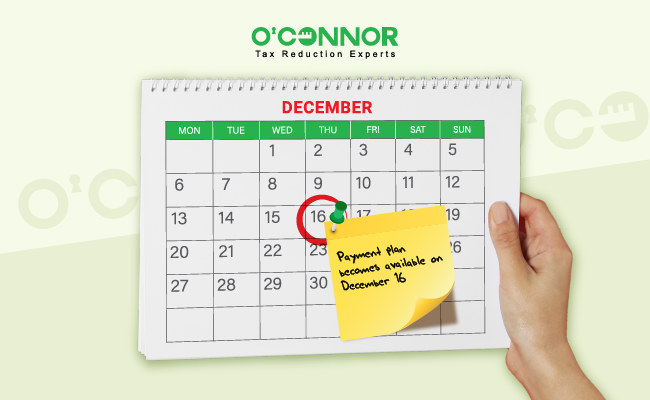
If you cannot make your payment in full, then you have the option of signing up for a payment plan with the Cook County Treasurer. This can only be used for delinquent taxes, meaning you cannot sign up early, and must wait for the December 15 deadline to pass. You can then sign up through the Cook County Treasurer’s website for a payment plan that will help you break up the tax bill into more digestible chunks. These payments can be set for monthly payments or set to be bi-weekly, whichever works better for you. The calculator on the site will give you a breakdown of both options, allowing you to pick the option that is right for you.
Even though you are enrolled in a payment plan, your taxes are still considered delinquent, which means penalties and interest still accumulate by Illinois law. Your payment plan will take these costs into consideration when you join, giving you a reccurring bill with those increases factored in. There will be an interest rate of 9% for payments, which is half the standard 18% rate. While this does add to costs in the long run, it is certainly better than what the total would be if you waited to pay later in one lump sum. Making monthly payments also helps stave off the Annual Tax Sale, which can see properties with overdue taxes being sold to cover the costs. To avoid the Annual Tax Sale, your taxes must be paid off within 13 months.
2026 Taxes are due in April
While your payment plan will help you settle the second installment of your taxes, the next round of bills is quickly approaching. While the recent tax bills were delayed months, you will only be granted an extension of one month for your first 2026 tax bill. Originally set to be mailed in February and due in March, the 2026 first installment will instead be sent in March and be due in April. This is not much time, especially if you are still paying off your current 2025 taxes. Unfortunately, there is little chance of your taxes in 2026 being any lower than your current ones, at least if you let them stand as they are.
Appeals Can Lower Your 2026 Taxes

While it is too late to do anything about your current tax bill, you can look to bring down future burdens. Exemptions are your first step, and you should have every one that is applicable. If you forgot to add an exemption, you can get it retroactively added through a certificate of error, though these are currently being delayed thanks to the same issues affecting tax bill processing. Appeals are the next option, one that a growing number of Cook County residents are exploring. Typically, you would have no recourse in lowering your first installment in 2026, as the appeal window has lapsed. However, due to the current unpleasantness, the BOR has reopened many townships to a last-minute appeal window.
O’Connor can Help Your Appeal Cases, now and in the Future
As you and your fellow Chicago taxpayers enter uncertain times, it pays to be vigilant. With more shakeups coming down the line, changing deadlines, and strange appeal windows, there is a lot to keep track of. If you are looking to take advantage of the recent appeal opportunity, or want to explore the option in the future, we at O’Connor can help. Appeals to the BOR require a great deal of evidence, which can be difficult to obtain if you are busy. The difficult barrier for entry is seemingly there to weed out those who lack means, which is why we are happy to be your equalizer. We can gather evidence for you, including using our advanced database to track property sales, allowing us to provide the exact details needed to prove unequal valuation and taxation. By signing up with us now, we can help you for years to come.
If you require representation in your appeal case, an attorney is required. We coordinate your appeal with an attorney who is an expert in property taxes, providing evidence, careful analysis, and sales comparisons. Our analysis, coordination, and evidence will never require any upfront costs, and you will only be charged a contingency fee if your appeal results in a reduction of your taxes. We will also examine and study your assessment and taxes every year, keeping an eye out for issues that can help your appeal again in the future. This will also allow you to stay abreast of deadlines or take advantage of sudden changes.